
What is the Festa Major de Gràcia?
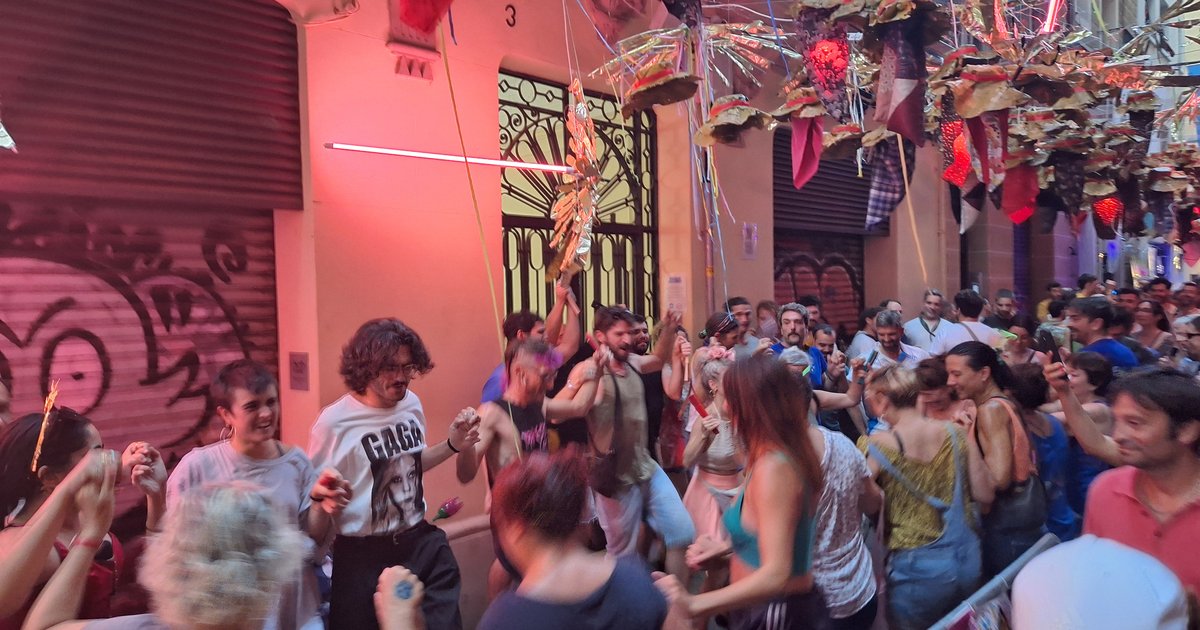
The Festa Major de Gràcia is the annual neighbourhood festival of Gràcia, the small, village-like district just above the Eixample in Barcelona. For one week every August, the residents of around twenty streets transform their own roads into immersive, fully decorated worlds: an underwater reef, a fairy-tale forest, a tribute to cinema, a riot of recycled plastic bottles spun into something beautiful. The streets then compete for a prize, and the rest of the city comes to walk through and judge for themselves.
What makes it special is that none of this is built by a contractor. Each street has its own comissió (a resident committee), and its members spend the best part of a year cutting, painting, sewing and welding the decorations by hand in garages and community spaces. The festival is, at heart, an enormous volunteer project. Add castellers building human towers, a correfoc tearing through the streets with fireworks, gegants parading at giant scale, and hundreds of free concerts, and you have one of Barcelona's most genuine and beloved traditions.
New to Barcelona? The Festa Major de Gràcia is a brilliant first festival because so much of it happens in daylight, at a human scale, in a walkable neighbourhood. You do not need tickets, a plan, or any Catalan, just good shoes and a willingness to look up.
Festa Major de Gràcia 2027: Dates
The Festa Major de Gràcia 2026 runs from Saturday 15 August to Friday 21 August 2026. The festival is formally opened by the pregó (the opening speech) on the evening of Thursday 14 August, and the decorated streets are unveiled to the public around midday on 15 August.
Dates
15 to 21 August 2027
Pregó (opening) on the evening of Thu 14 August.
Where
Vila de Gràcia
The streets between Carrer Gran de Gràcia and Travessera de Gràcia.
Decorated streets
23 streets in 2026
Each decorated and themed by its own resident committee.
Cost
Free
Streets, concerts and parades are free; you only pay for food and drink.
The rhythm of the week is consistent year to year. The decorated streets are open throughout, day and night, and the live programme builds across the seven days: concerts every evening on stages set up within the streets and squares, the popular-culture events (castells, gegants, correfoc) clustered around the weekends, and a quieter, more reflective nit de música or silent moment near the end. Recent editions have run to some 900 activities across 23 decorated streets.
The 2027 programme is not published yet, but three fixtures land in roughly the same slot every year and are worth pencilling in:
- Cercavila de Cultura Popular – Sunday 15 August, usually late afternoon. The opening parade of gegants, capgrossos, dragons, castellers and musicians through the neighbourhood.
- Diada Castellera – midweek, typically 19 August in Placa de la Vila de Gracia. The human-tower display, and the easiest one to watch if you have never seen castellers.
- Correfoc – Saturday 21 August, the final night, usually from around 21:30, starting at Placa Trilla and finishing at Placa de la Vila de Gracia. The fire run that closes the week. Cover your arms and legs, wear a hat, and leave anything flammable at home.
The full street-by-street programme and the official map are published by the festival in the weeks beforehand. Check them once they are out, because the schedule shifts slightly each year.
Why It Matters If You Live in Barcelona
Plenty of Barcelona's big events are, frankly, for tourists. The Festa Major de Gràcia is not. It is a neighbourhood throwing a party for itself, and that is exactly why it is worth your time as a resident.
- It is the easiest way to feel part of the city. You will be walking the same streets as families who have lived in Gràcia for generations, watching something they built with their own hands. It is warm, local and completely unpolished, the opposite of a stage-managed attraction.
- It is genuinely free. In a city where a lot of the famous sights come with a queue and a ticket price, an entire week of art, music and spectacle that costs nothing is a real gift. Bring cash only if you want a drink from the street bars.
- It shows you a different Barcelona. Gràcia in mid-August is the city at its most human: small squares, neighbours who know each other, a slower pace. If you have only seen the Rambla and Sagrada Família, this is the antidote.
- It is a fixed point in the local calendar. Knowing that Gràcia decorates its streets every August, that La Mercè comes in September, that the city has a real rhythm: that is what turns a place you live in into a place that feels like home.
The Decorated Streets
The decorated streets are the heart of the festival, and seeing them well takes a little strategy. They are not spread evenly across Gràcia; they cluster in the Vila de Gràcia, the older core of the district. Streets that frequently take part include Carrer Verdi, Carrer de Joan Blanca, Carrer de Berga, Carrer de Fraternitat, Carrer de Progrés and the Plaça de la Vila itself, though the exact list changes year to year.
Each street picks a theme and commits to it totally. The decorations are not bunting strung between balconies; they are full ceilings of sculpted material, often covering the entire street and turning it into a tunnel you walk through. Many are built almost entirely from recycled and reused materials, which is part of the craft and part of the pride. At the end of the festival a jury awards prizes for the best-decorated streets, and the rivalry between committees is real and good-natured.
See them twice. By day you can appreciate the detail, the materials and the sheer scale of the work. After dark, the same streets are lit from within and become genuinely magical: this is when the photographs happen and when the crowds are thickest. If you can, do a calm daytime walk-through and then come back one evening.
Follow the official map. The festival publishes a map of every participating street each year. Walking it in order means you see all the decorated streets without doubling back, far better than wandering and accidentally missing the prize-winners.
Living in Barcelona? Don't miss what's on
Barcelona Expat Daily: a 5-minute English digest of the day's local news, plus the events worth your time. Free, no credit card.
Castellers, Correfoc & Gegants
Beyond the streets, the Festa Major de Gràcia is a showcase of Catalan popular culture. If these traditions are new to you, the festival is an ideal place to meet them, because they happen out in the open with the crowd right alongside.
Castellers
The castellers build human towers (called castells) that can rise eight or nine levels high, with a small child scrambling to the top to crown it. It is athletic, precise and surprisingly moving to watch: hundreds of people in a tight base, total silence as the tower goes up, then a roar when it holds. The castells diada usually takes place in one of Gràcia's main squares over a weekend.
Correfoc: the fire run
The correfoc, literally "fire run", is the festival's wildest moment: colles de diables (troupes dressed as devils) dance through the streets brandishing pitchforks of spinning fireworks while drums hammer behind them, and the crowd runs and weaves through the sparks. It is loud, hot and not for everyone. If you want to be in it, wear long sleeves, long trousers, closed shoes and a hat or hood made of natural fibre (not synthetic), and follow the crowd's lead. If you would rather watch, find a doorway or a balcony view. There is usually a gentler correfoc infantil earlier for children.
Gegants and other parades
The gegants (towering figures carried and danced by a person hidden inside) parade through the district, often with capgrossos (big-headed figures) and a band. There are also sardanes, the traditional Catalan circle dance, and a packed children's programme. None of it requires a ticket; you simply need to know roughly when and where, which is what the festival programme is for.
Practical Info
Getting there
Gràcia is well served by public transport and that is by far the best way to arrive. Take the metro to Fontana (green line, L3) or Joanic (yellow line, L4), or the FGC train to Gràcia station. From any of them the decorated streets are a short walk. Driving is a bad idea: Gràcia's streets are narrow, parking is scarce at the best of times, and several streets are closed to traffic for the festival.
When to go
For the decorated streets in peace, go on a weekday, in the morning or early afternoon. For the full atmosphere (music, crowds, lit streets), go in the evening, accepting that weekend nights are very busy. For the castells and correfoc, check the programme, because those are scheduled to specific times and places.
Eat and drink
Each decorated street and square runs its own bar, staffed by the resident committee, and the takings help fund next year's decorations, so buying a drink there is a small act of support. Gràcia is also full of excellent independent restaurants and tapas bars; book ahead for the evenings, as the whole neighbourhood fills up.
What to bring
Comfortable shoes, water and sun protection: mid-August in Barcelona is hot. Some cash for the street bars. If you plan to be near the correfoc, the protective clothing described above. And a phone or camera, because the streets after dark are worth photographing.
If you live in or near Gràcia: this is a noisy week. Concerts and crowds run late into the night, right outside people's windows. Residents on the decorated streets sign up for it, but everyone nearby lives with it too. Plan around it, and if you are a guest in the neighbourhood, remember it is someone's home.
Insider Tips
- Go early on the first day. The streets are freshly unveiled on 15 August, the decorations are pristine, and the crowds have not built yet. By the final weekend some decorations show a little wear.
- Look up, and look closely. The first impression of a decorated street is the big effect; the reward is in the detail: tiny hand-cut figures, clever use of recycled material, small jokes. Slow down.
- Talk to the committee members. They are usually around, often in matching T-shirts, and proud of what they built. Most are happy to tell you about the theme and how long it took, a genuine way to connect with locals.
- Mix in the squares. Plaça de la Vila de Gràcia, Plaça del Sol and Plaça de la Virreina host concerts and events and are great places to sit with a drink between street walks.
- Don't try to do it all in one visit. Twenty decorated streets plus castells, correfoc and concerts is too much for an afternoon. Treat it as a week to dip into, not a checklist to clear.
- Keep an eye on the prize results. Near the end of the week the jury announces the best-decorated streets. Knowing the winners gives you a reason for one last evening walk, and bragging rights with your neighbours.
FAQ
When is the Festa Major de Gràcia 2026?
The Festa Major de Gràcia 2026 runs from Saturday 15 to Friday 21 August, in the Vila de Gràcia district of Barcelona. The opening speech, the pregó, is held the evening before, on 14 August, and the decorated streets are formally unveiled around midday on 15 August.
Is the Festa Major de Gràcia free?
Yes. Walking the decorated streets, watching the castellers, the correfoc and the gegants, and attending the vast majority of concerts are all completely free. You only spend money if you choose to buy food or drink at the street bars run by the neighbourhood committees.
Which streets are decorated and how do I find them?
Around twenty streets in the Vila de Gràcia are decorated each year by their resident committees, each to a different theme. The festival publishes a map of the participating streets: follow it rather than wandering at random, so you do not miss the prize-winners.
What is the best time to see the decorated streets?
Go during the day, ideally in the morning, to see the decorations clearly and without crowds. Then return after dark to see them lit up: that is when they are at their most magical. Weekday afternoons are far calmer than weekend evenings.
Is the Festa Major de Gràcia suitable for children?
Very much so during the day: the decorated streets, the gegants and the children's activities are all family-friendly. The correfoc involves sparks and loud fireworks and is intense; there is usually a gentler children's correfoc earlier in the day.
Do people in Gràcia mind the festival noise?
It is a real point of tension. The concerts and crowds run late, and residents live with a week of noise. If you live in or near Gràcia, expect little sleep that week; if you are visiting the area, be respectful: it is people's homes.
How do I get to Gràcia for the festival?
Take the metro to Fontana (L3) or Joanic (L4), or the FGC train to Gràcia station; the decorated streets are a short walk from each. Avoid driving: the streets are narrow, parking is scarce, and several streets are closed to traffic.
Where can I keep up with what's happening in Barcelona?
Our free daily newsletter sends a short, English-language summary of Barcelona's news and events every day, so you always know what is going on in the city, festival week or not. Join below.
Daily Barcelona news in English. Free.
Join 1,800+ expats across Spain. Every day: a 5-minute summary of Barcelona news, events and what's worth your time, in clear English.